Tuesday, August 24, 2010
The Colors duke, the colors
Ok so this is only mildly related to photography but I think the science is pretty awesome. There is an article on a blog I don't know too well that talks about figuring out how statues were painted back in the Greek, Roman, and Egyptian times. They use techniques like rake lighting across the objects or ultraviolet light to find patterns on the surface. "Infrared and X-ray spectroscopy can help researchers understand what the paints are made of, and how they looked all that time ago." Its pretty amazing stuff.
Friday, August 20, 2010
5 Years later
There is a small review on Richard Misrach's new photo book "Destroy This Memory" on NPR .
It is a collection of images that he took of the aftermath of Hurricane Katrina. His images differ from the hordes of images you see on this subject matter. They are images of the graffiti left by people on their lost belongings expressing the emotions or thoughts they were feeling about losing everything. This was a huge shift for Misrach who normally photographs with a large format camera, he used a small digital camera to capture these much more intimate scenes.
Thursday, August 19, 2010
Exploitation
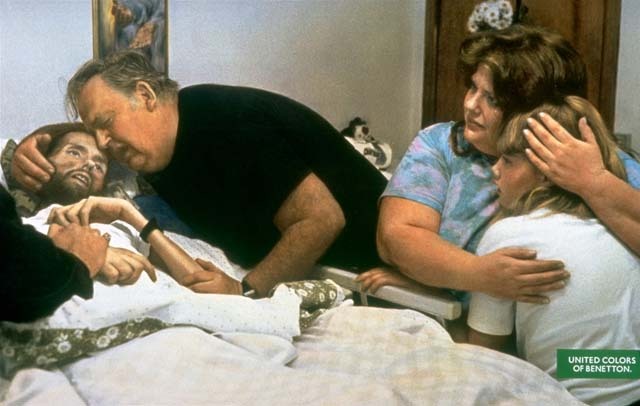
There was a photo essay in Life Magazine recently talking about this Iconic image from 1990. The article was photographer Therese Frare's way of being able to show more of the story that most people did not get to see. This photograph was taken with in an hour before David Kirby died. When the poster was used in an ad campaign United Colors of Benetton it struck up controversy because people thought it was exploiting this man before his death. Contrary to what people believe his parents wanted these images in his last moments taken because not only had they spent time with Therese but they thought in some way it would help with this cause. Therese also did not and still does not receive any money from the usage of this photo. I thought this article was a great glimpse into the world of AIDS and of photographers who chose to document this time in history. It is not the same as documenting a war, it is a much more personal event.
There is another photographer Nicholas Nixon, who has a book called People with AIDS that deals with 15 people living with and dying from AIDS also from the early 1990's.
Tuesday, August 17, 2010
Woman with the severed nose.
There was a blog on NPR recently that talked about what is too much to show a viewer of photographs.
There was an argument that showing an Afghan woman with her nose completely cut of was in some way too graphic for the average viewer. I had gotten mixed reactions to people that have seen this image. Some people thought it was extremely harsh and that it maybe shouldn't be on the cover. I personally agree with Time Managing Editor Richard Stengel when he says "In the end, I felt that the image is a window into the reality of what is happening" "I would rather confront readers with the Taliban’s treatment of women than ignore it." I feel like you almost need this extreme image to make people stop and see what is at stake. People so often go through life thinking "it happens to other people not me" and don't feel like they need to do anything to change it. Women in Afghanistan are about to lose some of the freedoms they had hoped this war would provide because we want to clean things up quick.
As far as censoring images because they make us feel uncomfortable or uneasy, sometimes we need to be taken out of our comfort zone to really grasp what is happening in the world today.
There was an argument that showing an Afghan woman with her nose completely cut of was in some way too graphic for the average viewer. I had gotten mixed reactions to people that have seen this image. Some people thought it was extremely harsh and that it maybe shouldn't be on the cover. I personally agree with Time Managing Editor Richard Stengel when he says "In the end, I felt that the image is a window into the reality of what is happening" "I would rather confront readers with the Taliban’s treatment of women than ignore it." I feel like you almost need this extreme image to make people stop and see what is at stake. People so often go through life thinking "it happens to other people not me" and don't feel like they need to do anything to change it. Women in Afghanistan are about to lose some of the freedoms they had hoped this war would provide because we want to clean things up quick.
As far as censoring images because they make us feel uncomfortable or uneasy, sometimes we need to be taken out of our comfort zone to really grasp what is happening in the world today.
Subscribe to:
Comments (Atom)